
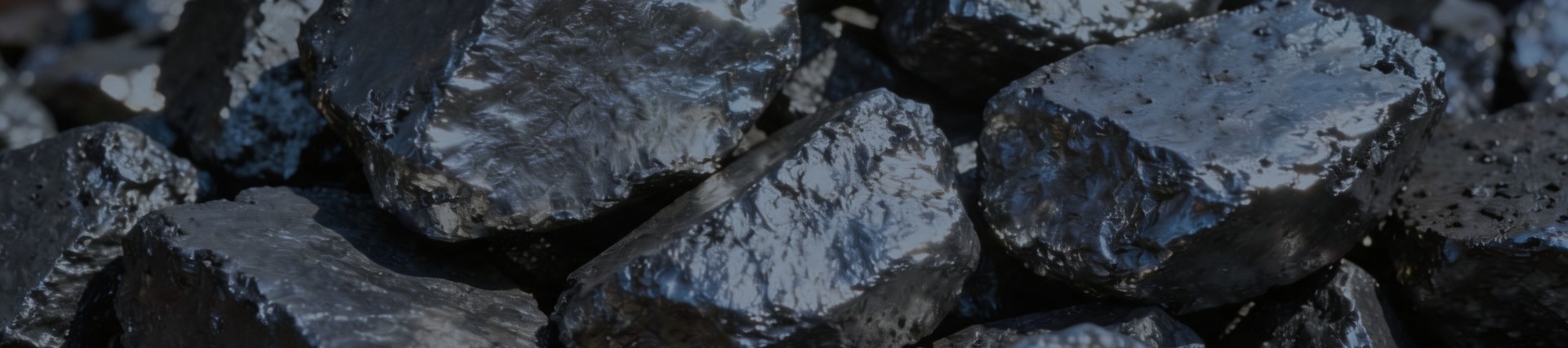
Manganese
Manganese is an indispensable strategic metal for modern industry and a vital component of steelmaking.
What is Manganese
Manganese is a metallic element that occurs widely in nature in compound form and accounts for approximately 0.1% of the Earth's crust. Its chemical symbol is Mn, its atomic number is 25, and its relative atomic mass is 54.9380. In elemental form, manganese is a grayish-white, hard, brittle, and lustrous transition metal. It has a density of approximately 7.21 g/cm³ (γ-Mn at 20°C), a melting point of 1,244°C, a boiling point of approximately 2,095°C, and an electrical resistivity of 185 × 10⁻⁸ Ω·m at 25°C.
Note: melting point and boiling point values may vary slightly depending on measurement conditions.
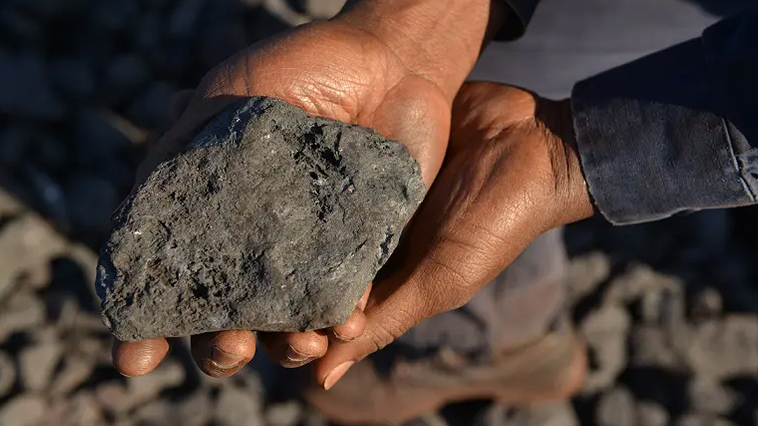
Role in Modern Society
Beyond the steel industry, manganese's core role extends into two major domains: the energy transition and human health. In energy, manganese-based cathode materials (LMFP, NMC) make it a critical raw material for electric vehicles and energy storage. In health, manganese is an essential trace element involved in bone development and antioxidant defense.

Manganese Supply Chain
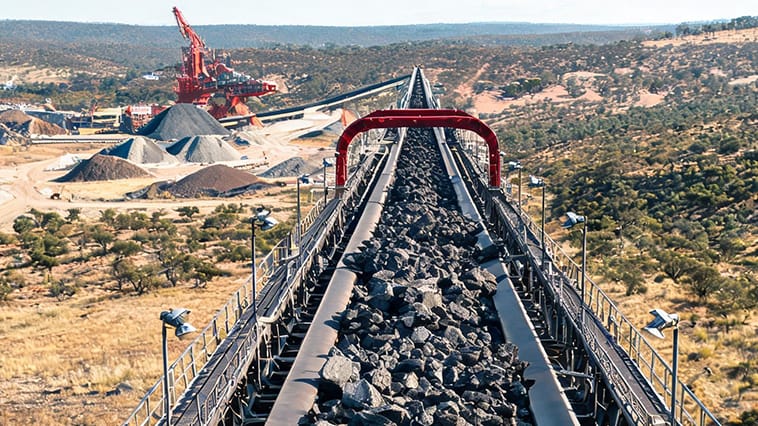
Upstream
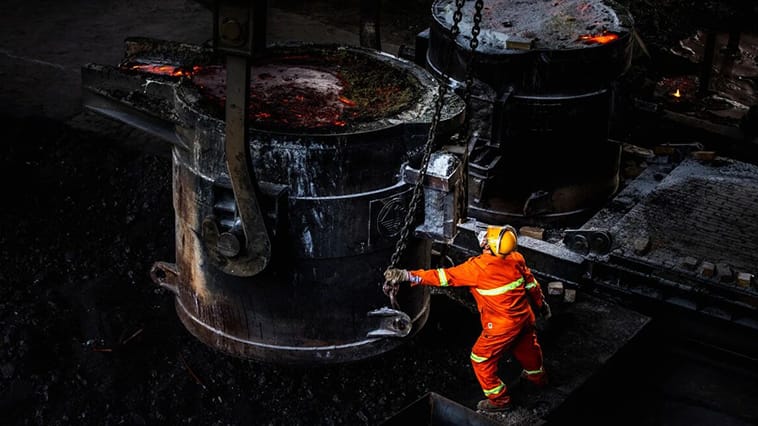
Midstream
Downstream

Applications of Manganese
Manganese has a wide range of uses. In industrial applications, manganese products primarily take the following forms:
Manganese Ferroalloys
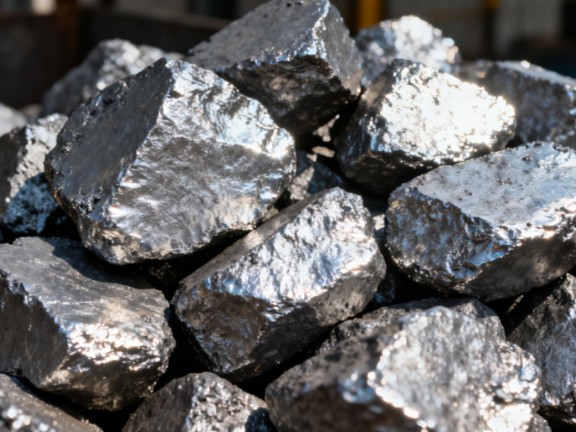
Produced by carbothermic reduction in submerged-arc furnaces, including silicomanganese (SiMn) and ferromanganese (FeMn). This is the largest-volume form of manganese used in steelmaking, serving for deoxidation, desulfurization, and alloying.
Electrolytic Manganese Metal (EMM)
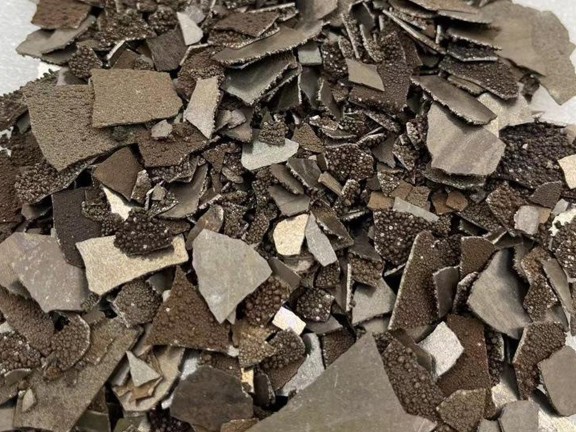
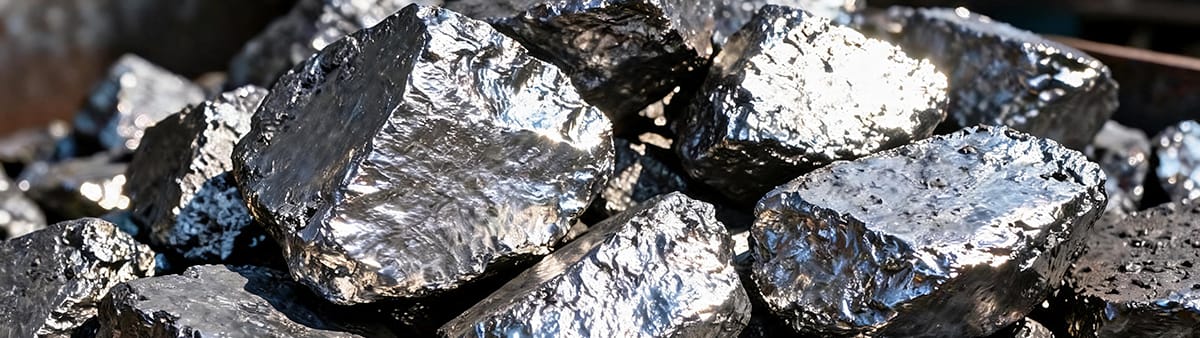
Produced through acid leaching, purification, and electrolysis, electrolytic manganese metal is a high-purity flake metal and one of the purest basic products in the manganese value chain. It is used mainly in specialty steels, stainless steel, aluminum alloys, and precursors for battery materials. EMM flakes can also be remelted, refined, and cast into manganese ingots in medium-frequency induction furnaces, or further processed into high-purity manganese sulfate, a key feedstock for NCM cathode precursors.
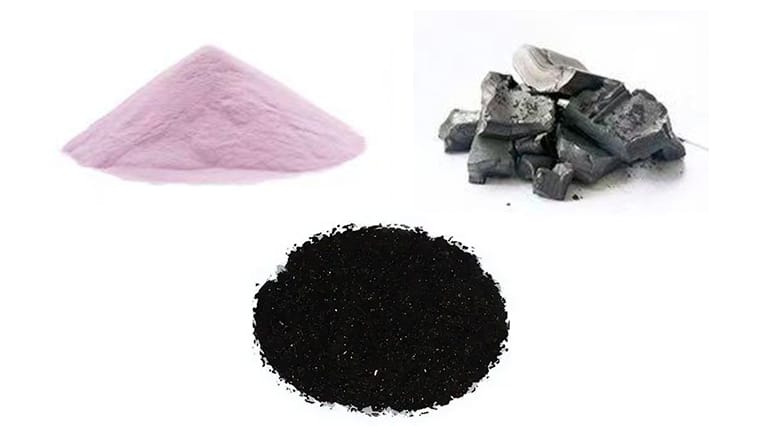
Manganese Compounds
Produced through further processing of EMM or manganese ore, these compounds include manganese sulfate, manganese dioxide, manganese(II,III) oxide, and potassium permanganate. They are used in chemicals, batteries, water treatment, and other applications.
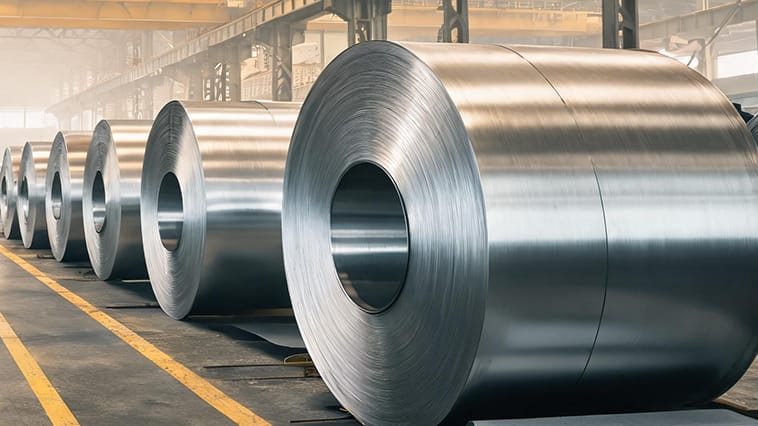
In the steel industry, manganese consumption is second only to iron. About 90% of global manganese consumption goes to steelmaking — hence the industry saying "no manganese, no steel." The remaining ~10% goes to non-ferrous metallurgy, new-energy batteries, chemicals, and agriculture. The five main application areas are outlined below:

Steel and Infrastructure
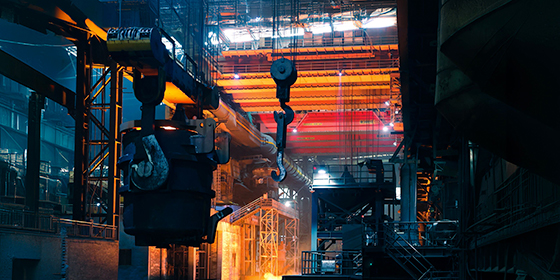
In steelmaking, manganese serves a dual function as a deoxidizer and desulfurizer, effectively purifying molten steel, eliminating hot shortness, and significantly improving the strength, toughness, hardness, and wear resistance of steel.
Silicomanganese (SiMn)
Silicomanganese contains manganese and silicon as its two main elements and offers high deoxidation efficiency. Some grades can also be refined to produce clean steel and high-strength automotive sheet.
Manganese Ferroalloys (FeMn)
Ferromanganese is classified by carbon content into high-carbon, medium-carbon, and low-carbon grades. High-carbon ferromanganese is smelted in submerged-arc furnaces at low cost and is suited to plain-carbon steel; medium- and low-carbon ferromanganese is further refined (e.g., via electro-silicothermic processes) to lower carbon, for use in quality and special steels.
In infrastructure, manganese alloys are widely used in structural steel, rails and rail transit, bridges and high-rise buildings, and automotive manufacturing. From high-speed rail tracks and the steel structures of sea-crossing bridges to automotive chassis and safety components, manganese is deeply embedded — as an alloying element — in the material skeleton of modern society, supporting urbanization and industrialization.
Non-ferrous Metallurgy
In non-ferrous metallurgy, manganese has two main application directions: as an oxidant in hydrometallurgy, and in forming industrially valuable alloys with other metals.
Oxidant
In the hydrometallurgical processing of non-ferrous metals such as copper, zinc, cadmium, and uranium, manganese dioxide or potassium permanganate is commonly added as an oxidant to precipitate iron impurities, which are then filtered out — purifying the solution and ensuring final product quality.
Manganese Alloy Materials
Manganese forms a variety of industrially valuable alloys with copper, aluminum, magnesium, and other metals — including manganese brass, high-manganese aluminum bronze, manganese cupronickel, aluminum-manganese alloy, and magnesium-manganese alloy.
Manganese Brass
Widely used in shipbuilding for corrosion-resistant structural materials, automotive synchronizer rings, bearing sleeves, gears, condensers, and valves — and is one of the main materials for marine propellers.
High-Manganese Aluminum Bronze
With manganese and aluminum as the main alloying elements, it combines high strength with excellent seawater corrosion resistance and good weldability — widely recommended for marine equipment and propellers.
Manganese Cupronickel
Mainly used in precision electrical measuring instruments.
Aluminum-Manganese Alloy
High hardness and strong corrosion resistance, combined with light weight — widely used in aviation and everyday equipment.
Magnesium-Manganese Alloy
Formed by adding an appropriate amount of manganese to magnesium, offering good corrosion resistance and temperature performance — widely used in aviation.
Chemicals and New Materials
Manganese has rich valence states, giving rise to a variety of industrially valuable compounds widely used in catalysts, water treatment, pigments, battery materials, and feed additives.
Basic Chemical Raw Materials
Manganese Sulfate (MnSO₄)
A foundational raw material for many manganese products. In agriculture it is used as a micronutrient fertilizer and feed additive; its high-purity form (high-purity manganese sulfate) is a key precursor for cathode materials in new-energy batteries.
Manganese Dioxide (MnO₂)
The main component of natural pyrolusite, a black powder with strong oxidizing capability, widely used in chemicals, batteries, and ceramics. As a chemical catalyst it is used in organic synthesis and oxidation reactions, and for paint driers and glass decolorization.
Potassium Permanganate (KMnO₄)
A strong oxidant widely used in drinking water and wastewater treatment, pharmaceutical disinfection, and oxidation reactions in chemical production.
Manganese Carbonate (MnCO₃)
Mainly used to prepare other manganese salts, soft ferrite materials, and ceramic glazes.
Manganese Acetate
An important organic manganese salt widely used in fine chemicals, mainly as a catalyst, drier, and mordant.
New Energy Materials
The following compounds have established applications in traditional chemicals, and their high-purity variants are becoming key precursors for new-energy battery materials:
Electrolytic Manganese Dioxide (EMD)
A high-purity form of manganese dioxide produced by electrolysis, with a denser crystal structure and better electrochemical activity than ordinary MnO₂. It is core to alkaline zinc-manganese and lithium-manganese battery cathodes, significantly improving capacity and discharge performance, and is also used in magnetic materials, chemical catalysis, pharmaceuticals, and dyes.
Manganese(II,III) Oxide (Mn₃O₄)
Can be produced via the metal-manganese route (using EMM as feedstock) or the manganese-salt route (using manganese sulfate). High-purity products are key precursors for new-energy battery cathode materials.

New-Energy Batteries and Stationary Energy Storage
With its abundant resources, competitive cost, thermal stability, and high-voltage potential, manganese is evolving from a traditional industrial material into a core element of new-energy batteries. Two parallel supply chains are taking shape: one for lower-grade manganese used in steelmaking, and another for high-purity manganese used in batteries. The latter is becoming an increasingly important focus of global industrial strategy.
EV Batteries
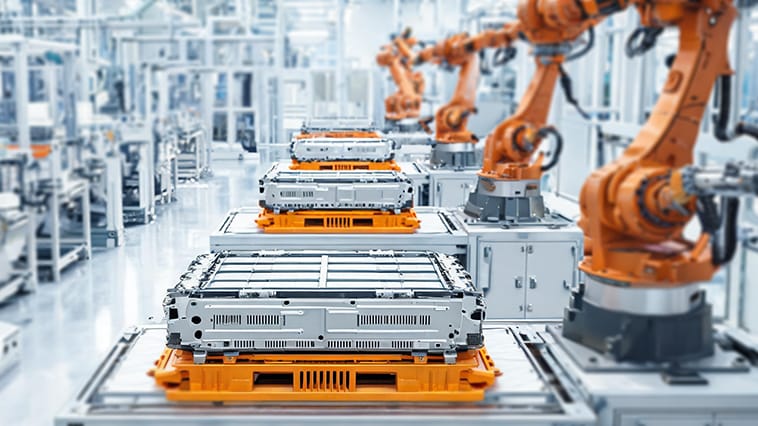
Lithium-ion batteries for EVs consist of four core materials: cathode, anode, separator, and electrolyte.
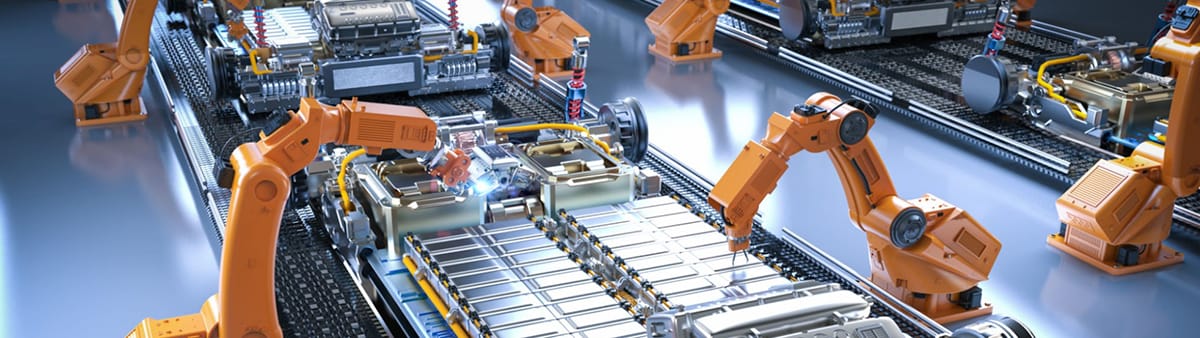
The cathode material determines the battery's energy density, safety, and cycle life. Among cathode systems, manganese-based materials — Lithium Manganese Iron Phosphate (LMFP), Nickel Manganese Cobalt (NMC), Lithium Manganese Oxide (LMO), and Lithium-rich Manganese-based (LMR) — are driving the rapid development of EVs and energy storage systems.
Lithium Manganese Iron Phosphate (LMFP)
An upgrade path from LFP, combining low cost with high voltage. Industrialization is accelerating notably in 2024–2026, drawing the highest industry attention.
Nickel Manganese Cobalt (NMC)
The most widely used manganese-based cathode material in EV batteries, with the highest commercial maturity and leading market share.
Lithium Manganese Oxide (LMO)
A mature, cost-effective traditional cathode material widely used in commercial vehicles, two-wheelers, and energy storage, with a stable market position.
Lithium-rich Manganese-based (LMR)
The development of industrial applications for this high-energy-density next-generation cathode material is still underway.
Together, these four manganese-based cathode systems form a diversified technology roadmap for current and future EV and energy-storage applications, propelling manganese's leap from traditional industrial raw material to critical energy-transition mineral.
Stationary Storage
Renewable sources such as wind and solar are intermittent and unstable; large-scale, safe, and economical stationary storage systems are essential to grid stability.
Manganese-based batteries are becoming an important stationary storage technology, including aqueous zinc-manganese batteries and manganese-based flow batteries. Manganese-based storage materials still face challenges such as poor conductivity, manganese dissolution, and structural instability.
With continued breakthroughs in structural engineering, interface control, and electrolyte optimization, manganese batteries are accelerating toward commercialization and are expected to provide key storage solutions for global renewable integration and grid stability.

Manganese and Human Health
Beyond industrial applications, manganese is also closely linked to human health.
Manganese is one of the essential trace elements for normal physiological function, involved in bone development, glucose and lipid metabolism, and antioxidant defense. A normal diet — grains, nuts, tea — provides sufficient manganese, and normal intake does not pose health risks.
In industrial settings such as mining, smelting, and welding, long-term excessive inhalation of manganese dust or fumes may affect the nervous system. However, under modern occupational-health standards, worker exposure is far below safety thresholds, and health issues from occupational manganese exposure are extremely rare — thanks to continually improving global occupational-health regulation and strict corporate protection measures. With scientific understanding and proper management, the health risks of manganese are controllable. GMA will continue to lead the industry in improving production environments and occupational health management.

Future Demand Outlook
As the global clean-energy transition accelerates and the electric-vehicle and energy-storage markets expand, manganese is finding growing applications beyond traditional steelmaking, particularly in battery materials. Demand from the steel sector is expected to remain broadly stable, while demand for high-purity, battery-grade manganese continues to rise, driving an upgrade in the industry's product mix. Resource security, processing capabilities, technological advancement, and international capacity cooperation will collectively shape the medium- and long-term supply-demand outlook.