


Process Optimization
Developing cleaner, more energy-efficient smelting and refining technologies to improve productivity and reduce emissions.
The global manganese industry is undergoing a major technological transformation. Traditional extraction and refining methods are evolving toward greater efficiency and lower carbon to meet the growing demands of modern industry.
Innovation is increasingly focused on upgrading metallurgical-grade manganese into high-purity chemical products for advanced manufacturing, energy storage, and other emerging technology fields. These developments are helping the industry meet higher standards of performance, sustainability, and environmental responsibility.
International research programs are helping bridge the gap between laboratory science and large-scale industrial application. Collaborative projects across academia, industry, and technology partners are driving innovation in the following key areas:
Developing cleaner, more energy-efficient smelting and refining technologies to improve productivity and reduce emissions.
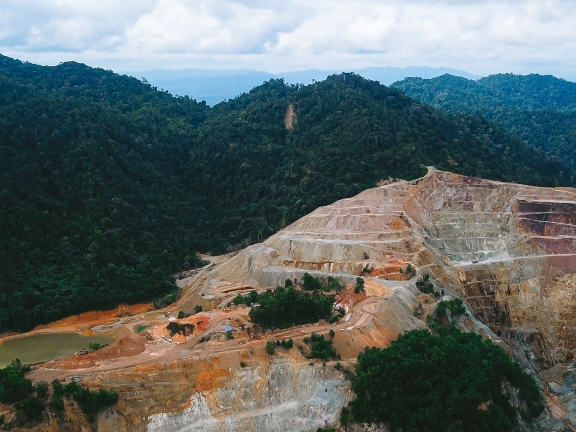
Measuring and reducing the environmental impact of manganese production through improved sustainability practices and resource management.

Partnering with universities and research institutions to explore new commercial applications and advanced manganese materials.
Manganese is becoming increasingly important in next-generation energy storage systems. High-purity manganese sulfate monohydrate (HPMSM) is a key raw material for lithium-ion batteries in electric vehicles (EVs).
R&D is expanding into manganese-rich chemistries such as lithium manganese iron phosphate (LMFP) and nickel-manganese-cobalt (NMC). These technologies can lower battery costs, improve thermal stability and safety, and reduce reliance on expensive critical minerals like cobalt.
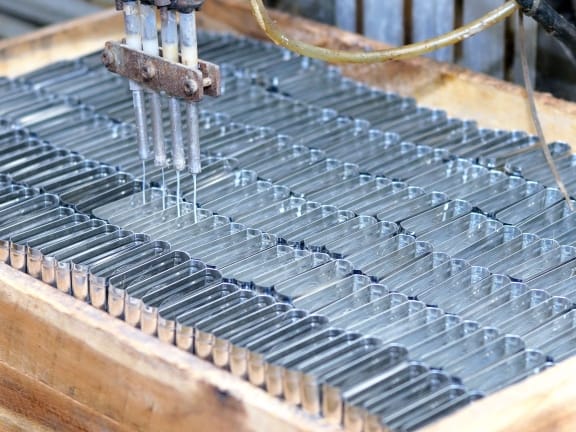
Manganese continues to play a vital role in modern metallurgy, with new applications emerging in advanced alloy development.
High-manganese austenitic steels (HMnS) offer exceptional strength, durability, and extreme-temperature resistance, making them valuable in industries such as liquefied natural gas (LNG) transport, infrastructure, and aerospace engineering.
At the same time, lightweight magnesium-manganese alloys are helping improve structural performance and fuel efficiency in the automotive and transportation industries.

Building a circular economy for manganese is becoming a major priority for the industry. Current research focuses on advanced hydrometallurgical processing to establish closed-loop recycling systems for spent EV batteries.
Modern black-mass processing technologies can recover battery-grade manganese and other valuable materials from spent batteries and industrial waste streams. Other recycling initiatives also help recover manganese from slag and metallurgical by-products.
As EV adoption continues to grow, global demand for manganese recycling is expected to rise significantly over the coming decades.